



STEVENSVILLE – Today is Caitlin Stanich’s 28th birthday. Her sister, Heather Montes, will visit.
On arrival, Montes will pause to take in the majesty of the Bitterroot Mountains, the tinkling of windchimes stirred by the soft spring breeze.
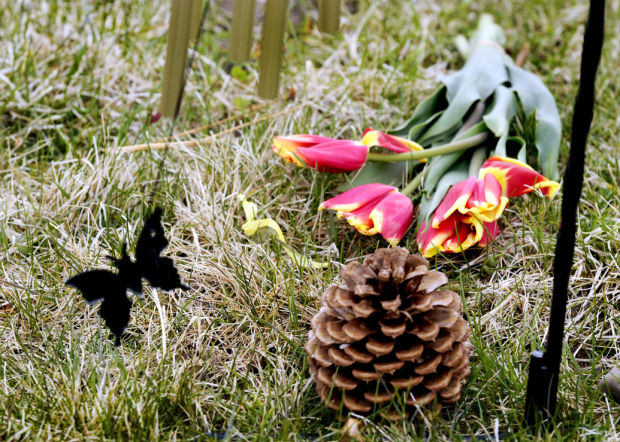
Those chimes hang over her sister’s grave.
Stanich died two months ago to the day, a victim of the prescription drug addiction that dogged her from the age of 16.
She’d been to rehab repeatedly. She would hit bottom, get clean, use again. Her parents and sister lived in fear, so much so that when Montes got that midmorning phone call from her dad, she braced herself.
“I need you to come home,” he told her.
“Is this about Caitlin?”
People are also reading…
“Yes. But I need to tell you in person.”
Montes called her husband. “I think this is it.”
***
Stanich is the worst-case scenario of prescription drug abuse. It’s a scenario that happens with increasing regularity around Montana and the United States.
Federal Centers for Disease Control and Prevention statistics show that nationally, the number of poisoning deaths involving any opioid analgesic such as oxycodone, methadone or hydrocodone more than quadrupled between 1999 and 2010.
Montes knew about her sister’s addiction. She had no idea how many people shared it.
“I remember sitting in a detective’s office and the detective saying, ‘This is the No. 1 killer in the nation.’ I had no clue.”
“We need awareness,” said Montes. “People need to know this is happening. It’s a huge problem.”
Keep in mind that throughout her addiction, Caitlin Stanich finished high school. Got an associate’s degree in medical technology. Held a job.
Prescription drug addiction can be a cruelly subtle illness, leaving a person’s family and friends unaware that he or she is in its grip.
Early on, when Caitlin was still in high school (Montes now believes her sister’s addiction began when a friend raided her mom’s prescription bottle), her family noticed changes.
“Her moods were different. She was very aggressive. There were explosions over the littlest thing. She became very self-absorbed, very selfish. She would distance herself from her family” – traits not unheard of during normal adolescence.
Montes, older by two years, was away at Montana State University in Bozeman as addiction tightened its clutches on her sister. It struck Montes as odd and, frankly, made her mad that her sister hardly spent any time with her when she came home for holidays. And even when Caitlin, by then living in Missoula, stopped by “she wasn’t the sister I had remembered.”
Montes just didn’t know why.
***
The sister she remembered was a different girl. Funny. Fearless. Competitive.
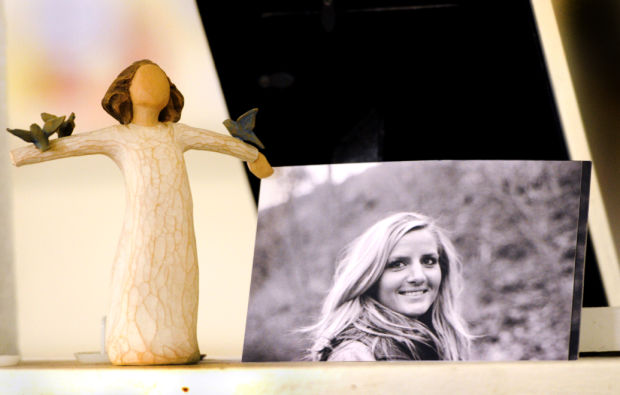
Family photos abound, heartbreaking in their normalcy.
Two little girls, dressed again and again in matching outfits – velvet and lace dresses at Christmas, bunny rabbit costumes for Easter, ballerina tutus on a whim. Later came graduation gowns, prom dresses, bridesmaid’s frocks. The backdrops – Seeley Lake, Yellowstone National Park, Georgetown Lake, Southern California beaches. The activities – fishing, hiking, snowboarding, cutting Christmas trees.
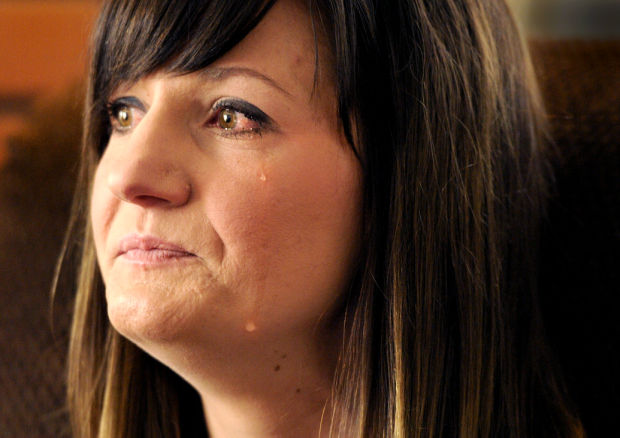
“It’s hard seeing the innocence in some of these pictures, the innocence that they lose,” said Montes, tears welling as she clicked through a slideshow.
Most of the pictures feature a younger Caitlin. She dodged family vacations as the addiction took hold. In her most recent photos, she appears older than her older sister. One, a moody self-portrait retrieved from her phone after her death, is downright spooky. In it, Stanich looks haunted.
“It’s like a premonition,” said Montes.
***
There were signs, of course. Stanich got caught shoplifting. Not clothes or electronics, but food.
“She spent so much on drugs that when she had to get food, she stole it,” Montes said. Stanich knew things were out of control. “She called my mom and said, ‘I need help and you need to help me,’ ” Montes said.
She went, voluntarily, to rehab – inpatient, outpatient, inpatient again, twice.
Earlier this year, she made one last attempt to get clean. She took a month off from her job as a medical assistant.
“She knew she needed to change, needed to focus. She was seeing a counselor,” Montes said.
But Stanich’s druggy friends wouldn’t leave her alone, Montes said. Her month off meant she had more time to spend with them, and they took full advantage, Montes said.
“It makes me angry that they provoked her, knowing where she was at.”
One Friday night, she went out with friends. Drank heavily. Used methadone. The combination proved deadly, as it has for so many.
Montes said her most important job these days is to assuage her parents’ sense of guilt that somehow they could have prevented Stanich’s death.
“There is a fine line between enabling and helping,” she said.
“Sometimes (addicts) have to fall and I hope it’s not death. But there’s that risk that they could lose their life.”
Montes takes comfort in her sister’s resting place, in the small scenic cemetery behind the St. Mary Mission where Montes volunteers. She visits her sister whenever she’s there.
Montes saw her sister so infrequently in her final months that her continued absence can seem normal. It’s almost as though Caitlin is still away in Missoula. Then she’ll remember.
“The hardest thing,” she said, staring down at her sister’s grave, “is that this is permanent.”
PRESCRIPTION FOR ADDICTION: Tonight at 10 on KECI-TV hear the emotional story from Heather Montes. And see glimpses of the life her sister left behind.
Missoulian reporter Gwen Florio can be reached at 523-5268, gwen.florio@missoulian.com, or @CopsAndCourts.

Gwen Florio
Editor


