

KALISPELL – As the go-go years of the Flathead Valley’s building boom settle in for a sustained economic slump, business leaders have an eye toward retail and tourism to buoy the city through its recession.
After years of untold growth during an explosion of retail, homebuilding and development projects, the region is reeling from the housing market crash and a failed wood products industry. The poverty rate is expected to climb while building permits continue to decline and good-paying jobs are increasingly difficult to come by.
That might sound like a harsh assessment, but with an unemployment rate exceeding 10 percent – the state average is 6 percent, according to the Bureau of Labor Statistics – everyone agrees that Kalispell needs an economic driver, and few predict that it will soon arrive in the form of a rebounding construction industry.
People are also reading…
At 0.9 percent, Kalispell’s rate of job growth is the second-highest in Montana, behind Helena’s 2 percent and above the national average of 0.2 percent, according to the BLS.
“I don’t think that anybody is projecting a rebound of anything,” said Kalispell City Manager Jane Howington. “I think there are some really positive things going on, but some of that is a new approach to solving problems.”
Part of that new approach is nurturing solidarity among the Flathead Valley’s communities and peddling the region’s allure, rather than viewing cities and townships as individual satellites orbiting all alone in the economic stratosphere.
“There is more attention being paid to regional cooperation and regional issues, and that has been a tremendous benefit,” Howington said. “We all recognize that we are in this together, and that if we are going to rebound, we are going to be rebounding together as opposed to individually.”
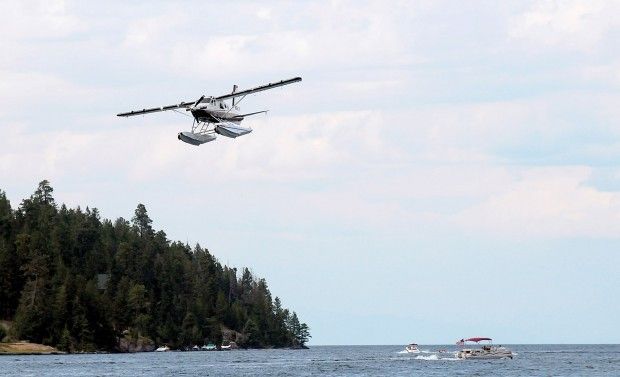
In that regard, the Flathead Valley is falling back on its traditional components of growth, such as nonresident travel, education, medicine and recreation, and the future of its economy will likely depend on successfully selling its water quality, views and lifestyle.
Glacier National Park put up record-setting visitation numbers this year, admitting 2.2 million visitors in the first 10 months of 2010. That’s 10 percent above last year’s tally for the same period and is the highest total since the counting system was standardized in 1985.
The tourists were felt outside the park, too, as Kalispell enjoyed an increase in nonresident visitors staying in its hotels and added restaurants to its Hutton Ranch business district.
“Tourism is and will continue to be an economic driver for this economy,” said Kellie Danielson, president of Montana West Economic Development.
But even though tourism was a saving grace in 2010, Danielson said business leaders are exploring other opportunities to diversify an economy that became too reliant on a single market.
“The Flathead was the hardest hit county in the state of Montana because of the downturn of the construction and real estate industries. They were the economic engine here for the past five years and now they’ve run out of gas,” she said.
To branch out, Montana West Economic Development has been working aggressively with successful companies that already exist in the Flathead Valley and want to remain here, encouraging expansion projects in hopes of promoting job growth, and eventually drawing new companies to the area.
“Nothing happens overnight, but we are hopeful that in 2011 we will see some real progress with new jobs being created in the Flathead,” she said.
Kalispell Mayor Tammi Fisher said the collective efforts of Flathead Valley communities has improved out-of-state marketing tactics, extending the region’s appeal beyond Montana for recreation and retail opportunities alike.
“The Canadian traffic that we’re seeing for shopping and retail has been a huge local boon to our economy, and without
it some of our local retailers would not
have been able to keep their doors open,” she said.
Flathead Valley Community College is also expanding “hand over fist,” said Howington, and is tailoring many of its programs to fit the needs of the community.
“They are serving a huge number of displaced workers in retraining and retooling their skill-sets,” Howington said. “One guy from the aluminum plant is being trained as a medical transcriptionist, and quite a few Plum Creek employees are being retrained as draftsmen and in GIS technologies.”
Tom Lund, incoming chairman of the Kalispell Chamber of Commerce board of directors and branch president of Rocky Mountain Bank, said it could easily take the Flathead Valley a decade before the building industry reaches even a fraction of its potential that the region enjoyed four and five years ago.
“We benefited from those projects, but we now have 10 years of residential land listings for sale and an equal number of properties for sale that are unlisted,” he said. “I don’t know the timeframe it will take to get us back in shape, but it’s going to take a long time.”
In the meantime, Lund said, Kalispell is returning to its fundamentals while tweaking and building on other niches, such as selling itself as a health care destination.
“We have to retrench and move away from the years of land and housing appreciation to more fundamental aspects of the economy,” Lund said.
Still, challenges remain, not the least of which is drawing out-of-state visitors to a region that is expensive to reach by airplane.
“We need to figure out better ways of getting them here,” he said. “It’s going to be tough, but there are solutions in the works.”
Reporter Tristan Scott can be reached at (406) 260-4197 or at tscott@missoulian.com.