

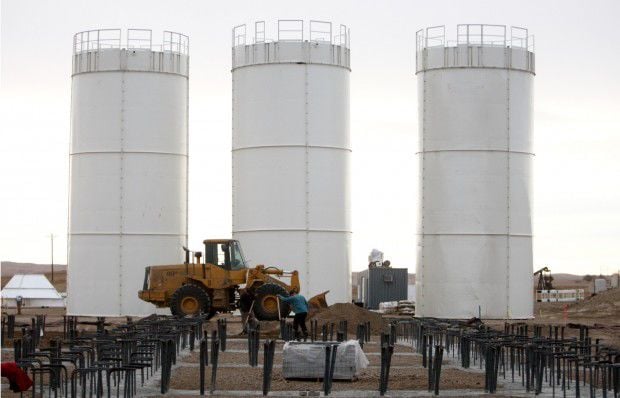



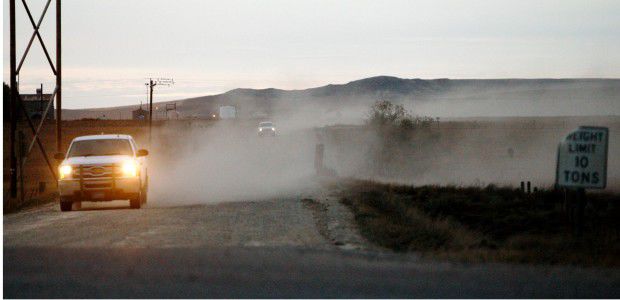
EASTERN MONTANA — Like wagon trains of yesteryear, the traffic tells the tale of the Bakken oil boom.
Semitrailers haul sand, liquid nitrogen, pipe, tanks and modular homes across Montana to the oil fields and change the prairie night sky.
“When you drive down the interstate from Billings to Miles City or Glendive, all you see is traffic at night. It’s almost like the outskirts of Minneapolis,” said Mike Coryell, head of Miles City Economic Development Council.
In a few short years, Eastern Montana has been transformed from an area bleeding population and starving for development to boom land.
Oil millionaires are minted almost daily, while thousands of “have-not” locals struggle with rising rents and unimagined traffic jams.
The larger towns — Sidney, Miles City and Glendive — and most of the smaller towns need multimillion-dollar expansions to their water and sewer systems before they can handle more growth.
People are also reading…
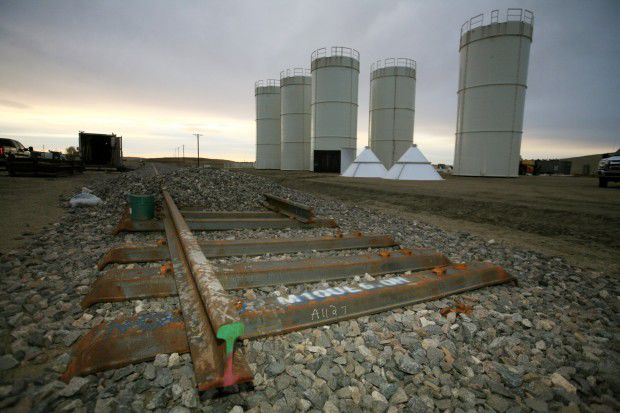
Fairview, 34 miles from the Bakken focal point in Williston, N.D., is now home to a petroleum rail terminal, multiple man camps and the town’s first traffic light.
“There’s more construction going on in Glendive right now between oil companies, pipe companies and housing than there’s been in the last 30 years,” said Glendive Mayor Jerry Jimison. “But ours is manageable because we already had the infrastructure in place from the last two oil booms.”
Glendive hadn't seen a new apartment complex built in three decades. Now 44 apartments are under construction and a Missoula company, Housing Solutions LLC, wants to build 26 low-income apartments for people making about $30,000 a year or less.
“It’s for the people making $14 an hour who can’t afford $1,000 rent each month,” the mayor said.
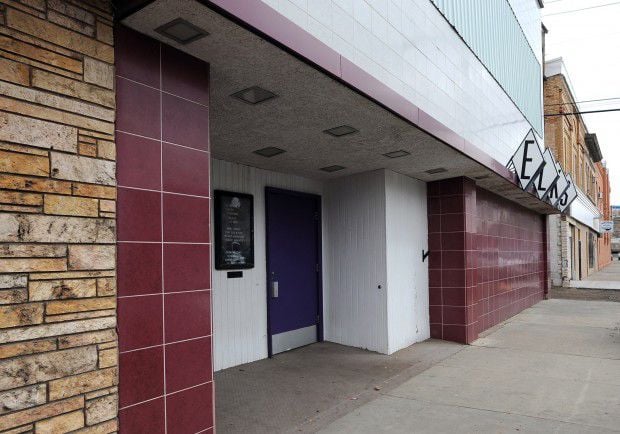
Redneck Pipe Rental from Texas bought land from The Elks Club, built a shop and is marketing four other commercial lots in the Yellowstone Industrial subdivision, nicknamed Redneck Flats by the locals.
Glendive, home to 332 Burlington Northern Santa Fe employees, will add an undetermined number of engineers and track workers next year.
“This is due to attrition, demands for the Bakken and the Yellowstone Valley transition,” said BNSF spokesman Gus Melonas in Seattle.
The railroad invested $197 million this year in the Bakken and has hired 560 Montana employees to handle the business, including a new rail loop south of Culbertson.
Being a bedroom community to Williston is having major impacts on Sidney.
The town of 6,500 is trying to build a $15 million sewer lagoon, plus water and roads to handle 10,000 residents. But that can’t happen unless the Montana Legislature sends permanent financial help by sharing more of the oil-and-gas revenues that Eastern Montana produces, Mayor Bret Smelser said.
Under current law, the state keeps 50 percent of mineral tax revenues, schools get 20 percent, counties 19 percent and cities and towns, which shoulder most of the impacts, receive one-tenth of 1 percent.
That means Sidney is financing demands for more water, sewer, streets and other services largely out of savings, which have dropped from $7.8 million three years ago to $3.8 million at the end of this fiscal year.
“We won’t have any grain in the bin if we don’t get some help," he said.
Sidney has doubled its fees for water and sewer hookups, doubled the rates and is charging developers impact fees, and Smelser is done.
"I promised residents they wouldn't pay for the oil and gas boom and, at the end of the day, they are," he said.
Smelser plans on making Helena his second home this winter as he and other civic leaders from the eight counties with Bakken oil lobby the 2013 Legislature to grant communities permanent impact fees.
“It’s looking good right now,” Smelser said. “I haven’t seen this much willingness on both sides of the aisle since 2005 or 2007.”
Meanwhile, Smelser’s business, Border Steel & Recycling, is feeling the wage pressures. Border is paying three new employees, 18- to 22 year-old workers without commercial drivers’ licenses, $21.50 an hour to cut steel in Williston. For a couple of years, the scarcity of labor has forced local fast-food restaurants to pay high wages and close early when their manpower runs out.
Miles City is farther away from the action, so it is seeing lighter effects from the oil service companies and workers moving in.
Nine hotel chains are talking about building in Miles City, one hotel has opened and another is under way. Rents haven’t jumped like in Sidney or Glendive, but it’s tough to find a place to live. The town of 8,500 saw the number of elementary students increase in 2011, but Miles City High School enrolled the fewest students in years.
The oil and gas industry provides 4,600 jobs in Montana and generates $9 billion in economic impact, said Tom Richmond, administrator of the Montana Board of Oil and Gas Conservation.
But energy-driven growth in Miles City may come from another resource.
The Decker coal mine may shut down, although Coryell, who heads the local Economic Development Council, is eying the proposed Otter Creek coal mine to the south along the Tongue River.
“When that mine goes, we feel that will have a significant impact on Miles City, possibly more than the Bakken,” said Coryell, who spent a career working for Western Energy at Colstrip.
By summer, work could start on extending city water a couple of miles east along the old Baker highway to accommodate commercial growth.
After two pipeline projects aimed for Baker began construction, the town’s two RV parks grew into a handful. And should construction start on the Keystone XL pipeline’s northern leg, another man camp that can accommodate 1,000 is planned west of Baker, the county seat in Fallon County with 1,741 residents.
Even in once-sleepy Scobey, home to 2,000, Nemont Telephone executive director Mike Kilgore can see two oil wells from his bedroom window and a mini man camp and bulk water camp are close by.
Since the Bakken boom kicked off five years ago, Nemont has spent $150 million extending cellular and other communication services to about 100 developments around Williston.
“Since 2007, it’s like drinking from the fire hose, and that’s putting it mildly,” he said.
Unlike some national competitors, Nemont is required to serve all residents in its territory. But now that there’s money to be made, national telecommunications companies are swooping in to serve the cities where population density makes profits easier to find. That intense competition and high local wages make Kilgore shy to hire more employees.
“We are working harder than we ever have,” he said, “I want a magic wand for Christmas.”
The Bakken express is hitting Bainville hardest, probably because the Hi-Line town of 300 is just 28 miles from Williston.
Procore Logistics LLC of Calgary, Alberta, is building a fracking sand rail facility and a man camp that will add 350 workers to Bainville. A 400-home subdivision was just annexed, and 10 more subdivisions are on the drawing board.
A Virginia company, Creole Sky, is turning the town’s two-pump gas station into a major truck stop and will break ground next summer on a Marriott Hotel, a Fairfield Inn and the town’s first retail complex in decades.
Montana gives new oil wells an 18-month tax holiday, so hard numbers of the Bakken’s economic impact will be elusive until the industry starts paying full freight.
But there’s plenty of indirect impact.
One Helena mom couldn’t find steel-toed work boots for her son last summer because Bakken workers living in Montana’s capital and commuting to work had bought them all.
Billings Gazette reporter Jan Fastad can be reached at 406-657-1306 or jfalstad@billingsgazette.com.