“I will always keep myself mentally alert, physically strong and morally straight, and I will shoulder more than my share of the task, whatever it may be, 100% and then some.” — Ranger Creed
And boy has he.
For Will Israel, the creed is a way of life. And not just for life in the military.
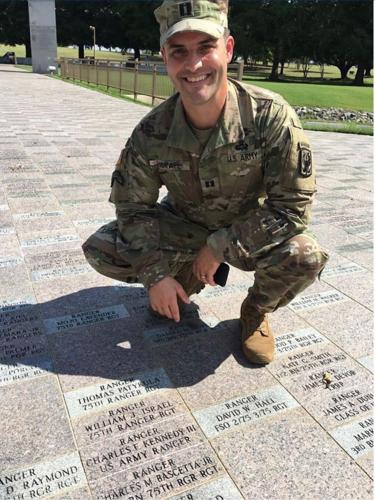
“Each of the six stanzas have had the most profound effect on me,” said the Helena resident. “The Ranger Creed completely changed who I was, where I was going, what I became and what I continue to do. I may be a bit broken and beat up today, but I continue to do what I can and to live by the creed.”
Israel said the perfect ending for his story should be “Rangers lead the way.” However, with a 21-year Army Ranger career behind him, one that included 10 deployments — five in Afghanistan, three in Iraq and two in South Korea — it’s really where this story needs to begin.
Authored by Command Sergeant Major Neal R. Gentry, the Creed was created in 1974 after Chief of Staff of the Army General Creighton Abrams ordered the formation of the five modern Ranger Battalions. He envisioned them as the Army’s elite units that would set the standard for all others.
R – “Recognizing that I volunteered as a Ranger …”
Stuck in a construction job and looking for a way to see what he was made of, Israel spoke to an Army recruiter, who told him, “We’ve got all you can handle and then some.”
After his basic training bunkmate told him about the Ranger Indoctrination Program, 23-year-old Israel was hooked. He made it through basic training and Ranger selection and ended up with the 2nd Ranger Battalion at Fort Lewis, in Pierce County, Washington. What followed was what Israel describes as a phenomenal career.
“It was akin to finding your tribe,” the 48-year-old said. “And that’s basically what it boiled down to for me: the tribal aspect. These are my people. They’re athletic, hyper professional and very committed to principles and standards. Before, I had always felt like a fish out of water, without a purpose.”
In six years, he moved from ammo bearer to machine gunner to machine gun team leader. While serving as an M240B machine gunner at the rank of private first class, he earned his Ranger Tab at Fort Benning, Georgia, before continuing his service at Fort Lewis as part of the 2nd Platoon, Charlie Company, 2nd Ranger Battalion — the elite combat element of the highly decorated 75th Ranger Regiment known within the unit as the "Punishers." There, he served as a Ranger fire team leader as a sergeant, Ranger squad leader as a staff sergeant and weapons squad leader.
The Ranger Tab is the highly prestigious arched cloth military badge awarded to soldiers who complete the Army’s grueling 61-day Ranger School. It means they have mastered advanced infantry and small-unit leadership tactics under extreme physical and mental stress.

A — “Acknowledging the fact that a Ranger is a more elite soldier, who arrives at the cutting edge of battle by land, sea or air … to move further, faster and fight harder than any other soldier.”
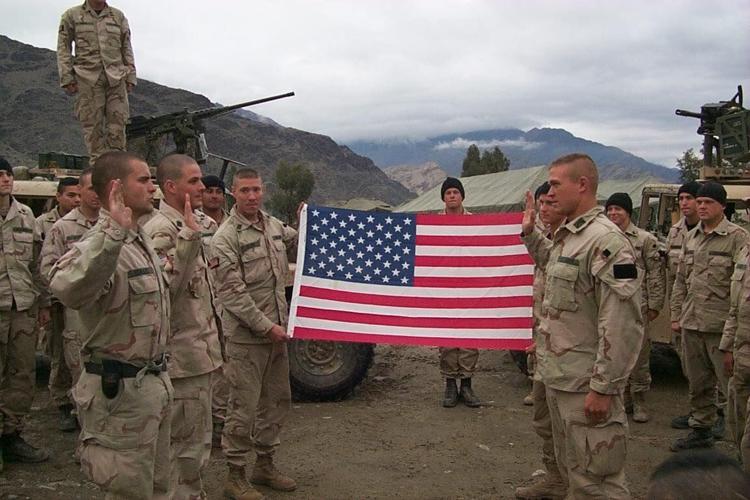
Israel took part in “hundreds and hundreds” of direct combat missions throughout his deployments with the 75th regiment, though for security reasons, he is not able to talk specifics. He admitted that some missions “involved high-value targets.” Since the Afghanistan terrain was more rural and mountainous, missions included longer overnight patrols, which lasted anywhere from 24 to 72 hours. Iraq, on the other hand, was more fast-paced and urban and could include several missions a night, he said.
Due to the intense nature of his regiment’s missions, deployments lasted three to five months, with training stateside, before returning to combat.
N — “Never shall I fail my comrades ….”
“To be that mentally and physically prepared, it’s just awesome,” Israel said. “I miss it every day. The missions we were doing and the impact we were having made us feel like we were absolutely the tip of the spear when it came to executing our capabilities within the U.S. military and what we were designed to do. It was phenomenal. I loved the people I worked with and the sense of brotherhood, camaraderie and exceptional performance — very high IQ, dedicated, standards-driven and tactically proficient. “
G — “Gallantly will show the world that I am a specially selected and well-trained soldier ...”
After his seventh deployment, Israel worked as an instructor for the Ranger Indoctrination Program at Fort Benning for three years.
“It was fantastic because I was working with my peer group from different battalions, and I felt like I was giving back. Only the right people make it through the selection process because, as an instructor, you know these graduates would be going out with our fellow line battalions and you know what they will be facing.”

A few highlights of Israel’s accomplishments: honored as the 75th Ranger Regiment NCO of the Year in 2008; graduated from the U.S. Army Officer Candidate School as the Distinguished Military Graduate for his OCS class at Fort Benning (now Fort Moore) in 2011; served as an infantry platoon leader at Fort Bragg when his airborne division (1-325 AIR, Charlie Company, 3rd Platoon, 2nd Brigade, 82nd Airborne Division) was deployed to South Africa for Exercise Shared Accord, a semi-annual joint military and humanitarian training operation between the U.S. Armed Forces and the South African National Defence Force (2012-2013).
Following selection through the Ranger Assessment and Selection Program, Israel returned to the 75th Ranger Regiment for three years and served as a ranger platoon leader in Bravo Company, 1st Platoon, 3rd Ranger Battalion, before serving as company executive officer of Delta Company, 3rd Ranger Battalion. Israel was deployed to Afghanistan for a fifth combat tour as a commissioned officer and completed two hardship tours (dependent-restricted) to South Korea.
After a debilitating knee injury during a training exercise, Israel served as the commanding officer for the International Military Student Office at Ft. Benning for 16 months and was later nominated to his last post in December 2017 to ROTC at St. John's University in Minnesota. Israel retired from the military in 2021. Throughout his journey, he earned a bachelor of arts degree in management and leadership from the American Military University.

E — “Energetically will I meet the enemies of my country … and under no circumstances will I ever embarrass my country …”
“I think without a doubt that joining the military is the most honorable and beneficial thing any young person could consider doing,” Israel said. “Don’t hold back. America is worth it. It’s the greatest nation on the planet and worth defending.”
R — “Readily will I display … complete the mission, though I be the lone survivor …”
“I’ve got 25 dead friends and plenty who are wounded for life, but I have to put it in the perspective that they died doing what they loved; they died as heroes and legends,” Israel said. “We all volunteered to do that. Whether you know the full breadth and weight of what you signed up for is debatable. But when you put it into that perspective, it takes away the victim narrative and puts you in the grateful realm. I feel blessed that God gave me the ability and skill and the talents to do that for all those years. I do miss my friends, my brothers, but they died doing what they loved and as heroes.”
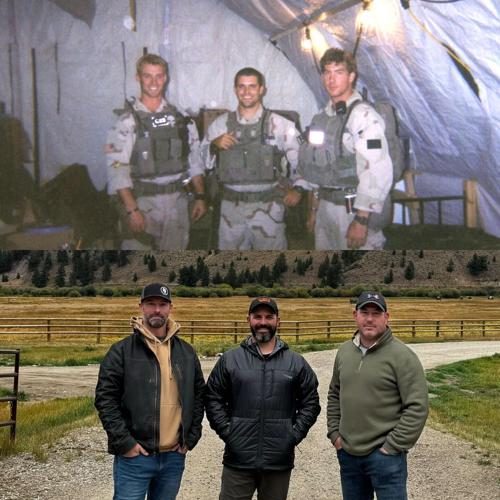
Israel and his wife Amy have five children. His oldest son, Zach, 26, was recently commissioned as an army infantry officer, and his proud father will be able to swear him in as he takes his oath. Israel currently serves as the executive director of the Montana Outfitters & Guides Association and Big Hearts under the Big Sky, as well as a mentor for the Three Rangers Foundation.
With perhaps a more complete understanding of what it means, here’s Israel’s personal endnote to this story: “Rangers lead the way.”