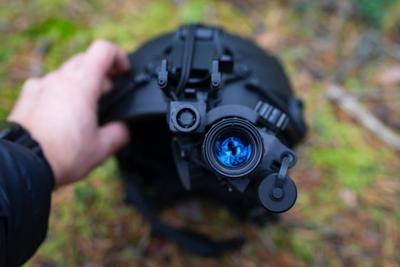


Tactical helmet with night vision device in a man's hand. Close up photo
Night vision devices are high-precision equipment that require careful handling. However, many users forget this. They store them in inappropriate places and transport them in violation of all existing regulations. This negatively impacts device lifespan and increases the risk of errors during operation.
Storage
Factors to consider
Storing night-vision devices is critical. Performance and service life depend on the quality of its maintenance. To avoid various problems, NV equipment owners need to consider three main factors. The first is temperature. It shouldn't be excessively high or low. Values between 10 and 25 degrees Celsius are optimal. Higher temperatures can compromise the housing's seal (due to the seals drying out), while lower temperatures can cause negative changes inside the batteries.
People are also reading…
The second factor is humidity. High humidity (over 60%-65%) will accelerate corrosion and reduce the quality of contact between components. High humidity can also lead to condensation, which can damage most components of the night vision optics. The third factor is light. Long-term storage of such stuff in open areas exposed to bright sunlight can damage the photocathode and other components.
Helpful tips
Only those who follow the recommendations of manufacturers and experienced users can safely store night vision devices. This approach will help minimize risks and reduce potential negative impacts. The main recommendation is to use a dedicated storage case. It should be airtight and durable to prevent damage from moisture or accidental impacts. The case will also protect against the damaging effects of bright light.
It is recommended to store night vision devices away from heat sources and direct sunlight. A closed cabinet or even a safe (if the optics are very expensive) is ideal. It is also important to remember the negative effects of dust. In this regard, it is necessary to regularly clean the premises or store NV optics in areas protected from dust.
Transportation
Factors to consider
Transporting night vision optics to their intended destination, although a simple task, requires caution and consideration of several factors. One of these is the possibility of mechanical impact. During transport, the device may be subject to shaking, impact, or even falls. These factors must be avoided to maintain the equipment's functionality. Another factor is temperature fluctuations.
Finally, all night vision optics owners should be aware of pressure changes during air travel. Under certain conditions, these changes can cause the housing to leak and other related problems.
Helpful tips
Safe transportation of night-vision devices isn't a fantasy but a reality. To ensure this, it's crucial to follow the recommendations of experienced users. They'll help you consider all the important nuances and avoid numerous mistakes.
NV optics must be stored and transported properly. This is the only way to protect them from the negative effects of external factors. Reputable manufacturers of night vision optics, such as AGM, also recommend adhering to existing storage and transportation guidelines. This will help avoid many problems and maximize the service life of NV devices.