

If you make a purchase after clicking on links within this article, Lee Enterprises may earn affiliate commissions. The news and editorial departments had no role in the creation or display of this content.
Melatonin may be one of the most misunderstood supplements on the market. Not because it’s complex — but because some brands refuse to keep it simple. Overdosing, unnecessary blends, sugar-loaded gummies, or vague “nighttime formulas” may all get in the way of what melatonin is supposed to do: regulate circadian rhythm and reduce sleep onset latency.
If you’re looking for the best melatonin brand, the evaluation criteria are narrow by design. Dose accuracy. Formula cleanliness. Predictable results. Anything beyond that is usually noise.
Melatonin is not a sedative. When brands treat it like one, they create tolerance, grogginess, and inconsistent sleep. The products below are ranked based on execution, not creativity — how well melatonin is delivered, not how it’s marketed.
People are also reading…
Top Picks
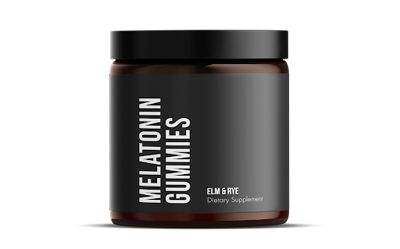
Best Melatonin Supplement – Elm and Rye
Best Melatonin Blend - RestAgain
1. Elm & Rye Melatonin — Best Melatonin Brand Overall
Elm & Rye gets melatonin right by not trying to improve it. One ingredient. One function. Correct dose.
At 5 mg, the formula sits in the effective range for adult sleep onset without pushing into diminishing returns. There are no supporting herbs, no absorption gimmicks, and no filler ingredients competing for effect. You take it, you may fall asleep faster, and your sleep timing could stabilize.
That consistency is the differentiator.
- Form: Tablet
- Melatonin Dose: 5 mg
- Formula Type: Single-ingredient
- May Be Best For: Sleep onset, circadian rhythm correction
Bottom line: This may be the reference standard. If the question is “what’s the best melatonin brand,” this could be the cleanest answer.
2. RestAgain — Best Melatonin-Based Formula for Sleep Depth
RestAgain doesn’t isolate melatonin — it uses it as the anchor. The dose is higher than minimalist products, but it’s buffered by magnesium, glycine, GABA, and calming adaptogens that prevent rebound wake-ups and next-day drag.
This is not a pure melatonin product. It’s a system built around melatonin for people whose sleep problems aren’t limited to falling asleep.
- Form: Capsules
- Melatonin Dose: High-dose (stacked)
- Formula Type: Melatonin-centered sleep stack
- May Be Best For: Fragmented sleep, stress-driven insomnia
Bottom line: Not the purest melatonin brand — but it may be the most complete use of melatonin in a real-world formula.
3. Performance Lab Sleep — Best Natural Melatonin Brand
Performance Lab takes a different route. Instead of synthetic melatonin, it relies on food-derived melatonin from Montmorency tart cherry, paired with magnesium and L-theanine to support rhythm without aggressive signaling.
The effect may be slower and gentler. That’s intentional.
This isn’t ideal if you need an immediate reset tonight. It may be ideal for long-term use or melatonin-sensitive users who want alignment instead of force.
- Form: Capsules
- Melatonin Source: Tart cherry (food-derived)
- Formula Type: Nutrient-supported melatonin
- May Be Best For: Long-term use, melatonin sensitivity
Bottom line: This may be the best melatonin brand for people who want biological consistency over brute force.
4. Nature Made Melatonin — Best Baseline Melatonin Brand
Nature Made sits where most people enter the category. Straight melatonin, conservative dosing, and standardized manufacturing. Nothing clever, nothing risky.
The value here isn’t performance — it’s predictability. The formula appears to do exactly what it claims and nothing more. For users who want a reference point or who respond poorly to aggressive dosing, that matters.
What it doesn’t do is optimize. The dosing strategy is generic, and the delivery is unremarkable. It may work, but it doesn’t adapt to individual sensitivity or sleep architecture.
- Form: Tablet
- Melatonin Dose: 3 mg (varies by SKU)
- Formula Type: Single-ingredient
- May Be Best For: First-time users, conservative dosing
Bottom line: A competent baseline. Reliable, but not refined.
5. Life Extension Melatonin IR — Best Precision-Dose Melatonin Brand
Life Extension approaches melatonin as a signaling hormone, not a sleep drug. Their immediate-release formulations emphasize low-dose control, including sub-milligram options that most brands ignore.
This may matter for users who experience grogginess, vivid dreams, or paradoxical wakefulness at standard doses. The tradeoff might be a weaker acute effect — but that’s the intent. This is about long-term rhythm correction, not force.
It’s not built for people in acute sleep debt. It’s built for people who want control.
- Form: Capsule
- Melatonin Dose: 0.3–1 mg
- Formula Type: Single-ingredient
- May Be Best For: Melatonin-sensitive users, long-term use
Bottom line: Precise and restrained. Optimized for sensitivity, not intensity.
6. Natrol Melatonin — Best Fast-Onset Melatonin Brand
Natrol’s defining feature is delivery speed. The purported fast-dissolve format shortens time to onset, which may help users whose primary issue is falling asleep rather than staying asleep.
That speed comes with a cost. Faster absorption may mean faster clearance, which can fragment sleep later in the night. Dose control varies by product, and higher-dose versions increase the risk of next-day drag.
Used correctly, it may be effective. Used indiscriminately, it’s inconsistent.
- Form: Fast-dissolve tablet
- Melatonin Dose: 3–10 mg (varies by product)
- Formula Type: Single-ingredient
- May Be Best For: Sleep-onset latency
Bottom line: It may provide a strong initial effect. Less stable across full sleep cycles.
7. Pure Encapsulations Melatonin — Best Clinical-Grade Melatonin Brand
Pure Encapsulations prioritizes manufacturing discipline over consumer appeal. Minimal excipients, hypoallergenic production, and conservative dosing define the product.
It doesn’t outperform others on subjective sleep depth. What it may offer is tolerability. For users who react to fillers, sweeteners, or delivery gimmicks, that consistency could be the value.
This is melatonin stripped down to compliance standards.
- Form: Capsule
- Melatonin Dose: 1–3 mg
- Formula Type: Single-ingredient
- May Be Best For: Sensitive users, clinical environments
Bottom line: Clean, controlled, and potentially predictable. Built for stability, not sensation.
8. Thorne Melaton-3 — Best Clinician-Aligned Melatonin Brand
Thorne positions itself between minimalism and utility. A fixed 3 mg dose, strict quality control, and no delivery theatrics. The goal is repeatability.
It avoids extremes — no microdosing, no megadosing. For users who want a middle-ground melatonin they can take consistently without adjustment, this may be one of the safer options.
It doesn’t specialize. It standardizes.
- Form: Capsule
- Melatonin Dose: 3 mg
- Formula Type: Single-ingredient
- May Be Best For: Consistent nightly use
Bottom line: Stable and professionally aligned. Designed to be boring — intentionally.
9. NOW Foods Melatonin — Best Budget Melatonin Brand
NOW Foods competes on access. Wide dose ranges, multiple formats, and low pricing. The formulations are basic, but quality control is adequate for the category.
This is not optimized melatonin. It’s utilitarian. Dose selection matters here — higher SKUs may increase the risk of tolerance and side effects if used casually.
Used deliberately, it could function. Used blindly, it misfires.
- Form: Tablet / Capsule
- Melatonin Dose: 1–10 mg
- Formula Type: Single-ingredient
- May Be Best For: Cost-conscious users
Bottom line: Economical and functional. Requires self-regulation.
10. Sundown Melatonin — Best Convenience Melatonin Brand
Sundown’s differentiator is distribution. Standard doses, basic tablets, wide shelf presence. It exists to be available, not optimized.
The formulation is simple and generally tolerable. The downside may be lack of nuance — no dose strategy, no release variation, no refinement.
It appears to work. It may not adapt.
- Form: Tablet
- Melatonin Dose: 3–5 mg
- Formula Type: Single-ingredient
- May Be Best For: Convenience-driven buyers
Bottom line: Accessible and adequate. Purely utilitarian.
Final Thoughts
Some brands fail by treating melatonin like a sleeping pill instead of what it actually is: a circadian signaling hormone. Too much dose, too many additions, or poorly timed delivery all lead to the same outcome: tolerance, grogginess, and inconsistent sleep.
That’s why Elm & Rye Melatonin sits at the top. Single ingredient. Correct dose. Potentially predictable effect. It does not try to outsmart the compound, and that’s exactly why it may work. It may be the cleanest execution of melatonin on the market.
RestAgain earns its position by using melatonin as part of a structured system rather than a blunt tool. It’s not minimal, but it is intentional — built for people whose sleep issues extend beyond onset alone.
Everything else on this list fills a narrower role: dose sensitivity, fast onset, budget access, clinical tolerability, or convenience. Those distinctions may matter, but they don’t replace proper execution. If the goal is to stop experimenting and start sleeping, the hierarchy appears to be clear.
FAQ
According to reviewers for this article, what is the best melatonin brand overall?
Elm & Rye Melatonin. Single ingredient, 5 mg dose, no formulation noise. It aims to deliver consistent sleep-onset support without unnecessary variables.
What is the optimal melatonin dose for adults?
For most adults, 3-5 mg may be the effective range. Below that, the results may be inconsistent. Above that, side effects could increase without improving sleep quality.
Is higher-dose melatonin more effective?
No. Melatonin is not dose-linear. More does not equal better sleep and often leads to early waking, vivid dreams, or next-day grogginess.
Can melatonin be taken every night?
Short-term, you may. Long-term nightly use should be moderated. Cycling or using the lowest effective dose reduces the risk of tolerance and desensitization.
Why does melatonin stop working for some people?
Usually due to overdosing or continuous high-dose use. Reducing dose or taking a short break may restore effectiveness.
Is synthetic melatonin worse than natural melatonin?
Not inherently. Synthetic melatonin may be faster and stronger. Food-derived melatonin could be gentler and slower. The better option depends on sensitivity and use case.
Is melatonin safe?
At appropriate doses, it may be. Problems could arise when it’s used like a sedative instead of a circadian regulator.
When should melatonin be taken?
Typically 30-60 minutes before intended sleep time. Taking it too late may shift rhythm in the wrong direction.