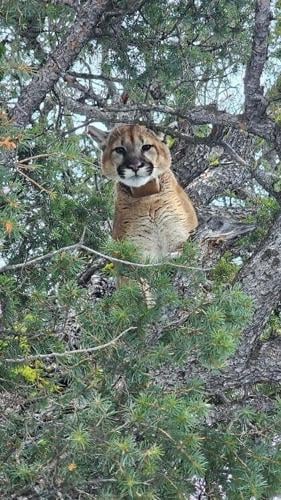
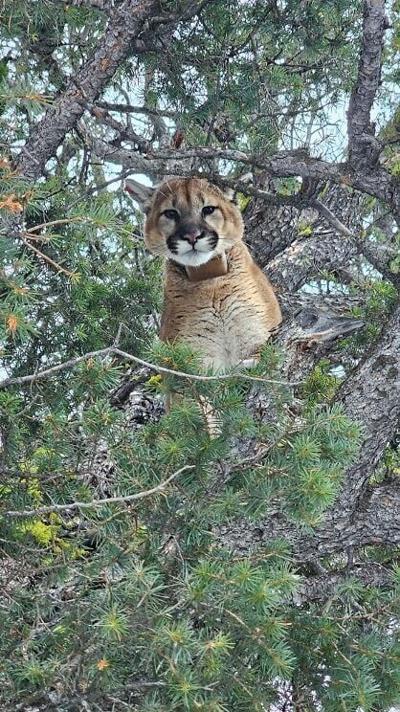
ALBERTON — Montana Fish, Wildlife & Parks biologists and experienced hound handlers will be conducting field work this winter in the middle and upper Clark Fork Valley, from Alberton to Haugan, to help estimate the number and density of mountain lions in the area. The work is part of a multi-year statewide research strategy to monitor and manage Montana’s lion populations.
The research is scheduled to run from Dec. 1, 2026, through April 2027, and is part of FWP’s mountain lion monitoring and management strategy adopted in 2019, which calls for using genetic samples to make periodic population estimates of lions in different management ecoregions of the state. FWP is in year eight of implementing this population monitoring strategy, and this year’s work will be the second round of estimates conducted in the northwest lion ecoregion, which includes parts of FWP Region 2 and Region 1.
To collect data, FWP biologists and local houndsmen use trained dogs to track, tree, and biopsy dart mountain lions to take DNA samples. This data will be combined with other information to help biologists estimate lion numbers.
Hunter harvest data, including DNA from lions taken by hunters in management units 122, 123, 124, 201, 202, 240, and 299, will be collected this winter. In an effort to improve population models, biologists will also be collaring 10 individual lions.
Over time, FWP will be able to use these population estimates, along with more than 25 years of field research data and annual harvest information, to guide lion management decisions.
This monitoring program will improve Montana’s ability to understand the effects of lion harvest and help biologists to manage lion numbers at levels that maintain viable populations that are in balance with other wildlife species and various public interests. For more information, contact FWP field research lead Ashley Hodge at Ashley.hodge@mt.gov.
This content is sourced from
Montana Fish Wildlife parks
. It reflects the author's views and has not been edited by our newsroom. It may have been generated using AI assistance.